A 5K start line needs fewer units than a marathon route with six water stations, and most race organizers in Coral Springs plan on one standard unit per 150 to 200 runners plus extras at aid stations. Add a light tower or power pole if your event runs before sunrise or after dark.
Race restroom counts depend on runner count, course length and how many aid stations you're staffing. A road race with 800 runners spread across a 5K loop needs less than a marathon with runners strung out over 26.2 miles and multiple medical tents. OSHA 1926.51(c) sets construction ratios at one toilet for 20 workers, and while a race isn't a construction site, organizers use the same math for staff and volunteers working the course. Runners need separate counts, usually clustered at the start corral, the finish chute, and every other aid station along the way. For a Coral Springs race, that often means standard portable toilets at the start, a mix of standard and ADA accessible units at the finish, and smaller clusters at mile markers. If your course crosses into Coconut Creek 5.5 miles east or Tamarac 6.0 miles south, factor in extra drive time for delivery trucks servicing multiple towns on race morning. Our how many porta potties do I need guide walks through the ratio in more detail. For big-field races, a 4 stall restroom trailer at the finish line cuts down on line backups better than scattered singles.
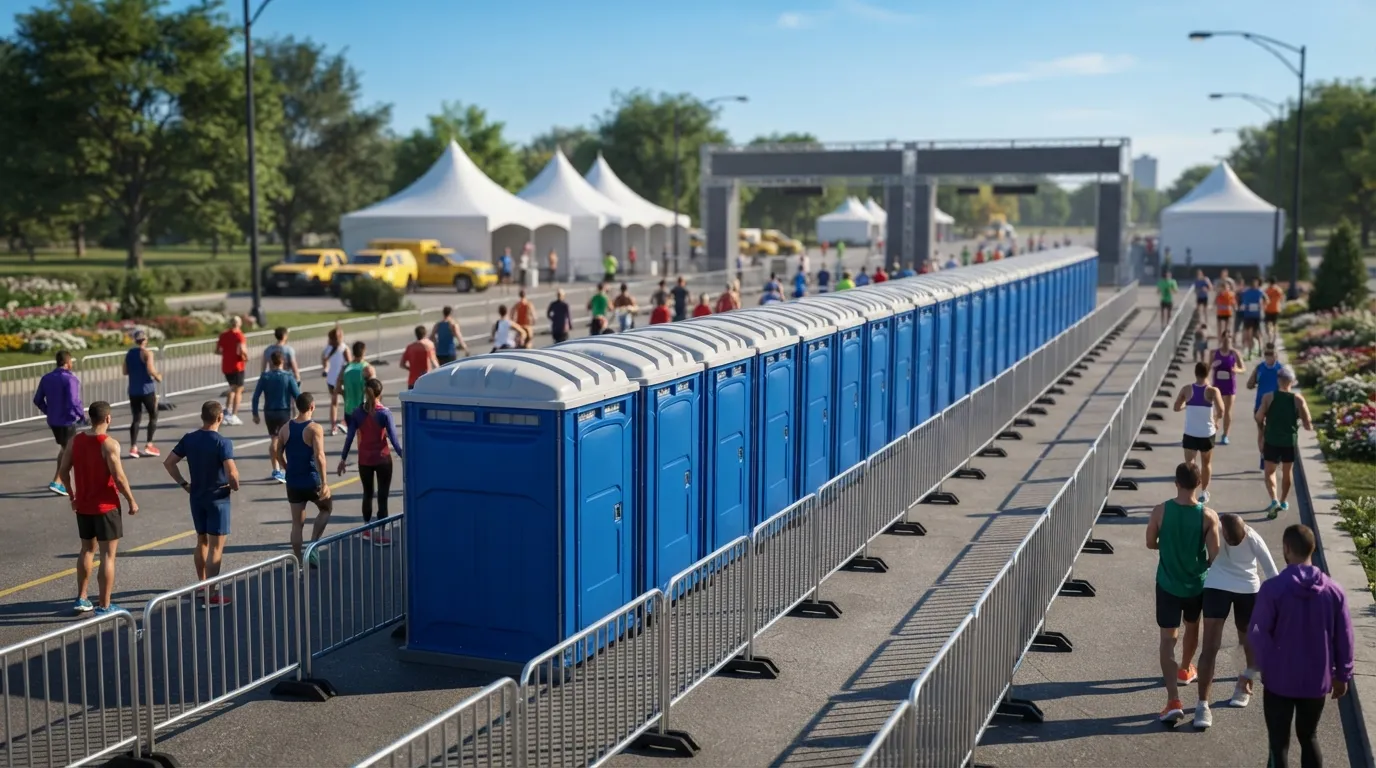
Every race with clustered portable units needs at least one accessible unit, and ADA Standards section 213.2 requires 5 percent of any cluster to meet that standard, never fewer than one. That means even a small aid station with four units needs one ADA unit sitting beside them. Accessible units need a 60 inch turning circle inside per ADA Standards section 304.3.1, and the door opening has to clear 32 inches per ADA Standards section 404.2.3. Placement matters too: the ground has to be stable and slip resistant under ADA Standards section 302.1, which rules out loose gravel or soft turf near a finish line. If your race draws spectators in wheelchairs or with strollers, keep an accessible route at least 36 inches wide per ADA Standards section 403.5.1 between the units and the course. Coral Springs races that expect a big spectator turnout sometimes add a deluxe flushable unit near the finish for VIP runners or sponsors, priced separately from the standard fleet.
Pre-dawn marathons need light towers at the start corral and med tents, and any temporary power pole feeding timing mats or PA systems needs to be braced against wind and foot traffic, not just staked loosely in turf. Run the base plate wide, guy-wire the mast at two points minimum, and keep cable runs covered where runners cross them; that combination of a wide base plate and two-point guying is the core of how to brace a temporary power pole on turf that will not hold a stake alone. OSHA 1926.404(b)(1)(ii) requires ground fault protection on any temporary circuit, which matters when timing equipment and lighting share the same generator loop near wet grass or morning dew. A light tower rental paired with a braced power pole covers the start line, the finish chute, and any aid station running before sunrise. Coral Springs organizers running events that start before 6 a.m. should walk the site the week before and mark where poles and towers go, since course marshals need clear sightlines and runners need to see the ground. Keep housekeeping in mind too: OSHA 1926.25 calls for clearing debris from work areas, and a cluttered aid station with cable spaghetti and trash bags is both a hazard and a bad look for sponsors.
| unit | duration | typical price |
|---|---|---|
| standard | event | $400 |
| ada | day | $230 |
| trailer | event | $3500 |
| service_fee | weekend | $700 |
Race weekends run on the weekend rate structure rather than a straight daily rate, since crews deliver Friday and pick up Monday. A weekend rental for a standard cluster runs in the $250 range per unit, with delivery and service fees added on top depending on how many stops the truck makes. Races that also need a temporary fence rental around the finish corral or crowd control barriers along the chute should bundle that into the same quote, since one delivery trip covers both.
Book 4 to 6 weeks out for anything over 500 runners. Race weekends compete with weddings and festivals for the same fleet, and event restroom rental slots fill fast in spring. Smaller local races can often get by with two weeks notice, but ADA units and trailers need more lead time.
Yes. A handwashing station rental with soap and towels satisfies 29 CFR 1910.141(d)(2), since hand sanitizer alone doesn't meet that standard. Place them next to aid stations and the finish line fuel tables.
Yes, and for finish-line VIP areas or sponsor tents a restroom trailer rental reads better than a row of standard units. A 2-stall or 8 stall restroom trailer works depending on expected finish-line traffic and budget.
Confirm placement rules with each city along the route, since Coral Springs code may differ from Pompano Beach 10.7 miles east or Deerfield Beach 11.0 miles east. Check our service areas page and confirm with each city's right-of-way office before finalizing sites.
Costs scale with runner count and course length. Check our porta potty rental cost page for full pricing, or request a quote with your runner count and course map for an exact number.
Yes. Coral Springs Porta Pros delivers marathon and race restrooms across Coral Springs and the surrounding metro, with same-day and next-day drop-off available on most orders.
Pricing depends on the unit and how long you need it. See our cost breakdown and request a free quote for an exact figure.
Standard rentals include scheduled service — a pump-out, a clean, a restock and fresh deodorizer. Busy or hot-weather sites can be serviced more often.
Call now or request a free quote — clean units, on-time delivery, transparent pricing.